America’s flags were some of the first “protest signs” and banners that artistically embodied the American spirit of resistance against England’s oppression.
“Unite or Die” was a vital rallying cry. The colonies had very different cultures and had competing interests. They could not afford to have in-fighting and division – there was a clear threat to their liberties, and they had to set aside their differences and combine forces to uphold liberty in America.
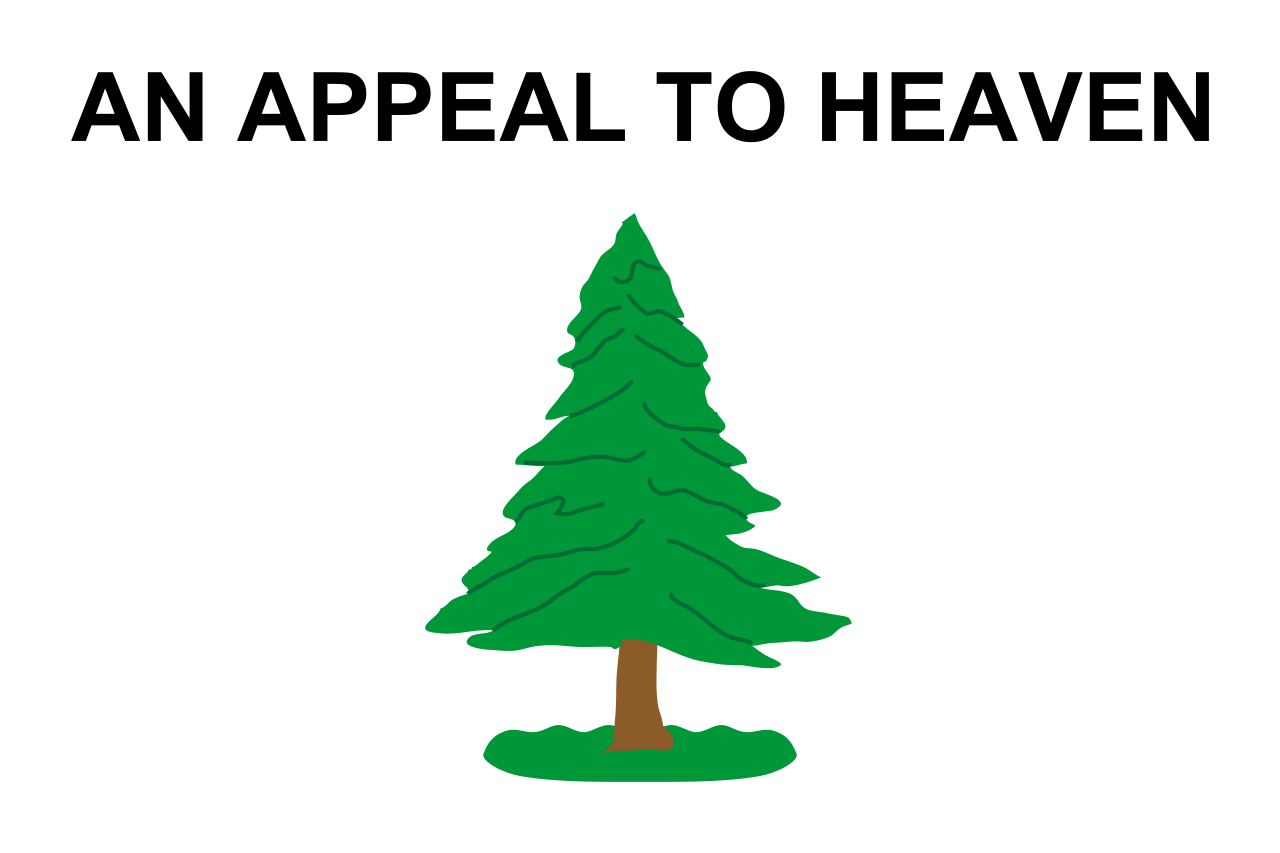
The Pine Tree Flag with “An Appeal to Heaven” flew on George Washington’s navy during the revolutionary war. The phrase was coined by John Locke, who wrote:
“And where the body of the people, or any single man, is deprived of their right, or is under the exercise of a power without right, and have no appeal on earth, then they have a liberty to appeal to heaven, whenever they judge the cause of sufficient moment.”
Patrick Henry used the phrase in his “Liberty or Death” speech, and it was also used in the Declaration of Independence; “…appealing to the Supreme Judge of the world…”



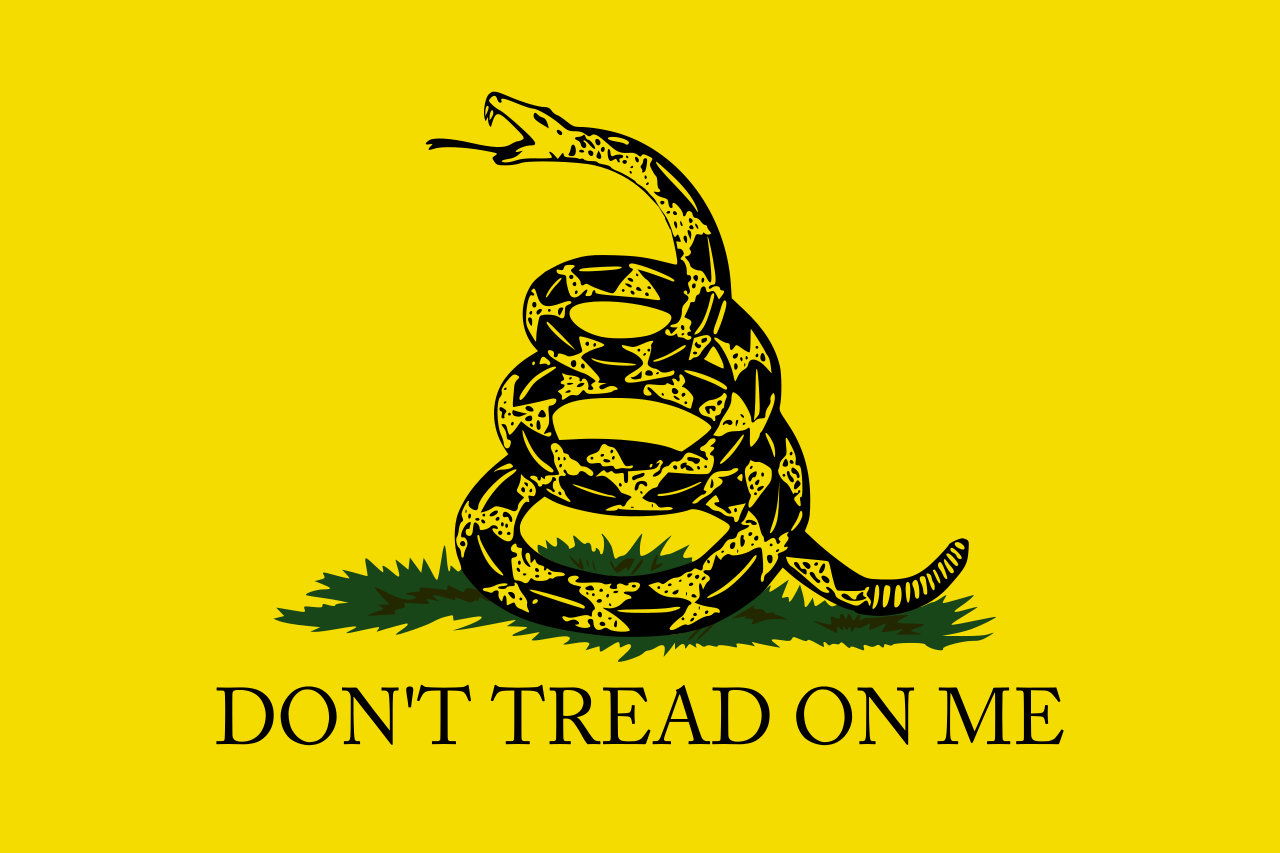
Rattlesnakes
Rattlesnake “Don’t Tread on Me” flags were immensely popular in the Revolutionary War. Benjamin Franklin suggested that the rattlesnake was a good emblem of the American spirit:
“I recollected that her eye excelled in brightness [beyond] that of any other animal, and that she has no eye-lids—She may therefore be esteemed an emblem of vigilance.
—She never begins an attack, nor, when once engaged, ever surrenders: She is therefore an emblem of magnanimity and true courage.
—As if anxious to prevent all pretensions of quarreling with her, the weapons which nature has furnished her she conceals in the roof of her mouth, so that, to those who are unacquainted with her, she appears to be a most defenseless animal; and even when those weapons are shown and extended for her defense, they appear weak and contemptible; but their wounds however small, are decisive and fatal:—Conscious of this, she never wounds till she has generously given notice, even to her enemy, and cautioned him against the danger of stepping on her.
—Was I wrong, Sir, in thinking this a strong picture of the temper and conduct of America?” – Benjamin Franklin


Independence, Liberty, Rights
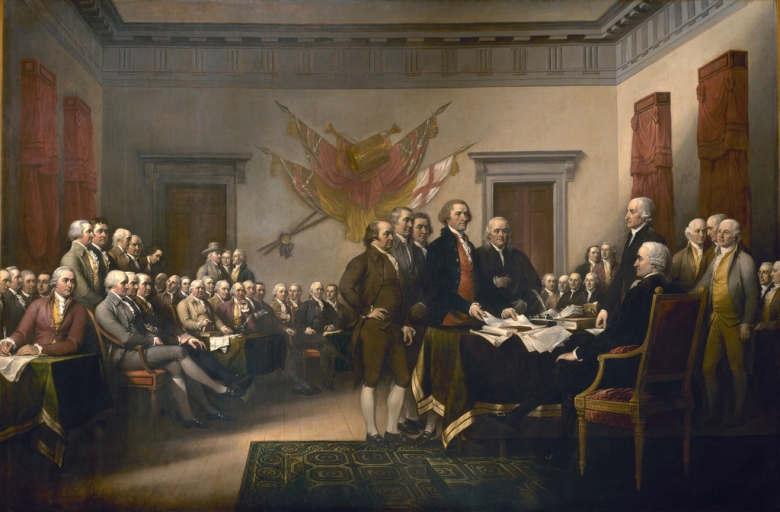
This painting was made in 1818, 43 years after the Declaration of Independence was presented to the assembled statesmen. It represents the memory of the event, impressed on American consciousness forever (as well as impressed on the memory of the rest of the world!).
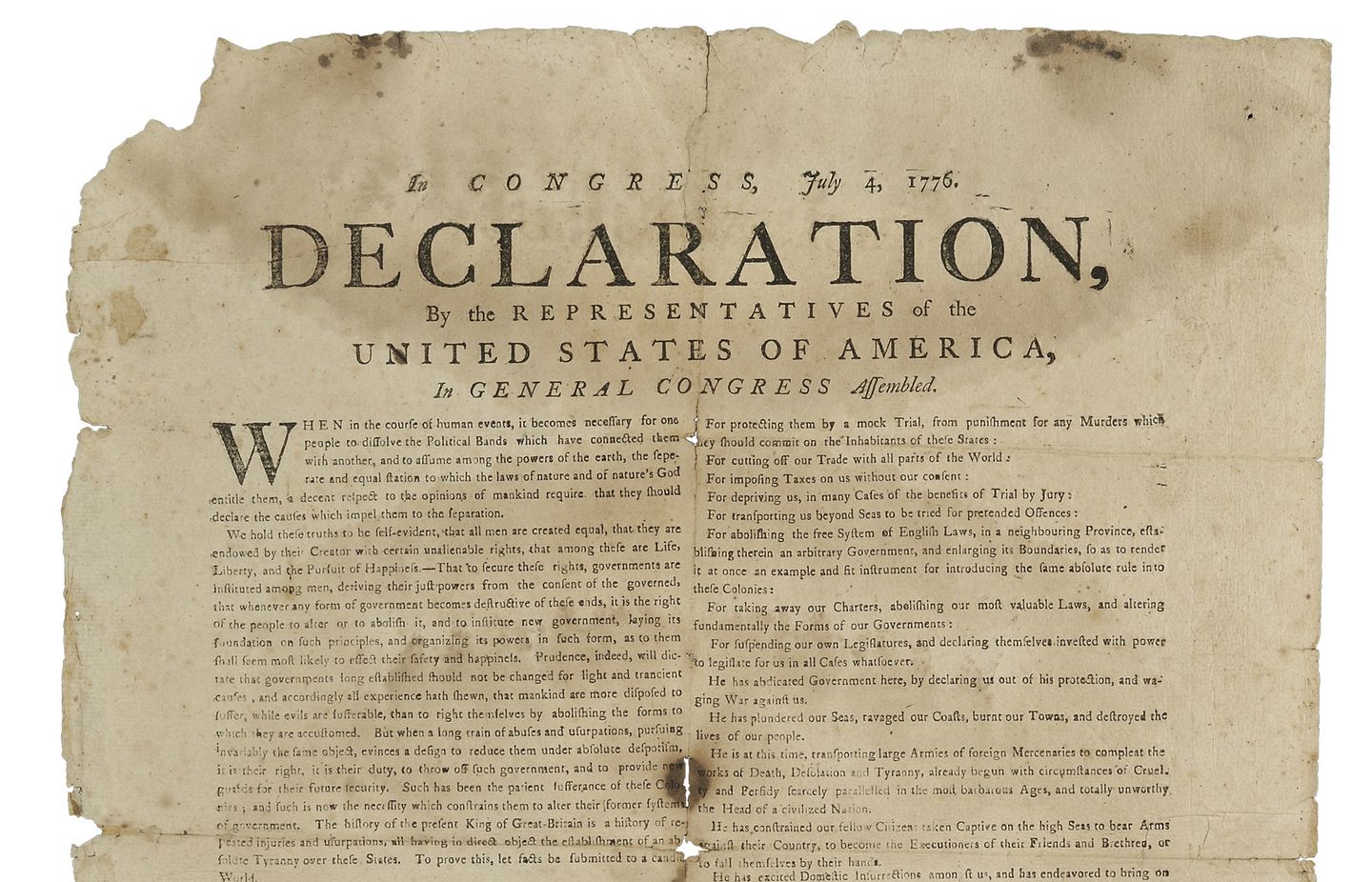
The Declaration itself, as well as the Bill of Rights, are presented here as well.

 Liberty and the Pursuit